
Passionflower Tea or Tincture-Tissue State Matching, Who Should Use or Avoid It
The Traditional Herbological tissue states tied to the use of this plant.
Passionflower is not a general sleep herb and it is not the latest social-media answer to “stress.” It is a nervine chosen for a particular tissue state: tension and constriction of the nervous system, often with the secondary exhaustion that follows prolonged overstimulation. When that pattern is present—the body is tired, yet the mind continues to circle—the plant has a traditional place.
When a different tissue state is dominant, a different plant is indicated even if the person uses the same modern words: “I’m stressed and can’t sleep.”It shines when the person is tense, wired, restless, over-alert, and unable to settle. It often disappoints when the person is cold, sluggish, foggy, depleted, or already sedated.
That’s tissue-state matching. You’re not just matching the herb to a diagnosis. You’re matching the herb to the person’s pattern.
This distinction is the core of the observational method used in Thomsonian, Physiomedical, and Eclectic practice, including the tissue-state framework taught by Dr. John R. Christopher. The herb follows the leading signs in the tissues, not the general complaint and not the current trend.
Passionflower, usually Passiflora incarnata, is used in Western herbalism as a calming nervine, mild sedative, and antispasmodic. Modern research has looked at its effects on anxiety and sleep, but the evidence is still limited. Traditional use gives us the better map: use it where there is nerve tension, excitability, and spasmodic unrest.
This is educational, not medical advice. Use extra caution with children, pregnancy, prescription sedatives, seizure disorders, surgery, and serious mood or sleep conditions.
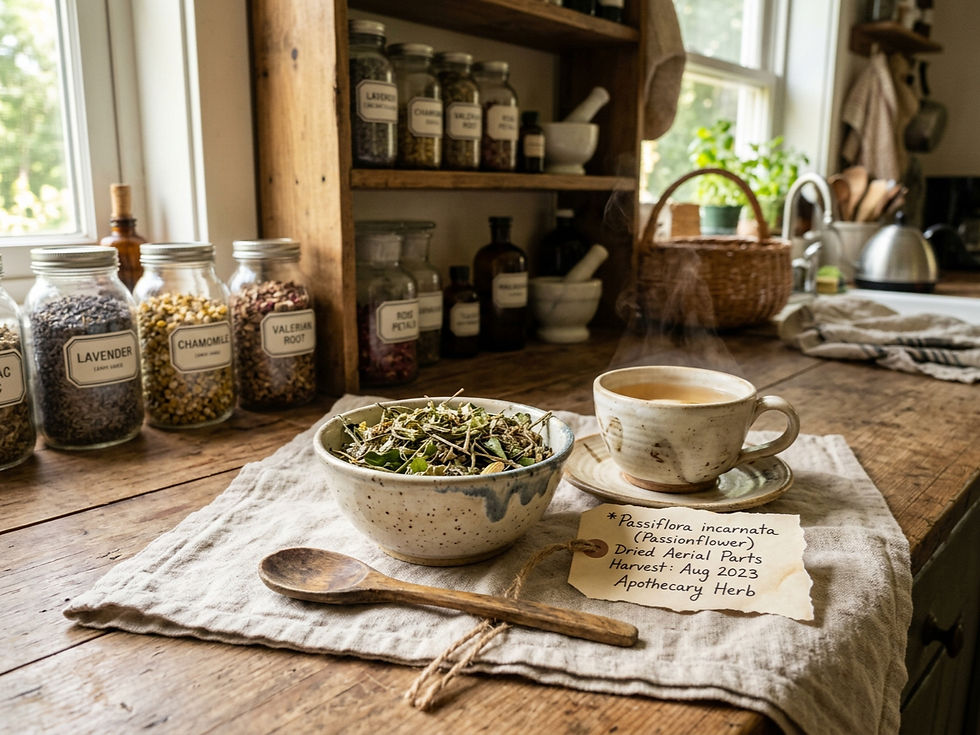
The general complaint versus tissue state matching
Modern language collapses many different conditions into two broad labels: stress and fatigue. Social-media cycles then attach a single herb or a short stack to those labels. One month the recommended plant is whatever is circulating for “calm.” The next month it is a different plant or a combination of supplements. Tissue state matching is done by the complaint, not by what is actually occurring in the person.
The older method works in the opposite direction. The same report of evening tension or poor sleep can arise from at least three distinct tissue patterns that are common in hectic modern life. Each pattern points to a different North American plant. Selecting by the label treats the herb as a broad category solution. Selecting by the dominant tissue state treats the herb as a specific response to what is present. The result is a more precise choice for a purpose.
Tension / Constriction.
The system is held tight. Thoughts loop. The person is fatigued yet cannot settle. Rest does not arrive because the nervous system remains constricted. This is the classic indication for passionflower (Passiflora incarnata). Eclectic texts such as King’s American Dispensatory describe it as irritation of the brain and nervous system with atony and sleeplessness from overwork or worry. The plant supports the release of that constriction. It does not force sedation.
Heat / Irritation.
The restlessness carries a sharp or heated quality. There is easy irritability, a sense of internal heat without fever, twitching, light or broken sleep, or excessive sensitivity to stimulation. This pattern is traditionally matched to skullcap (Scutellaria lateriflora), a nervine long used for overstimulated, irritated nervous tissue when heat or sharpness is present. Passionflower may still be useful if tension is also strong, but skullcap addresses the heated edge more directly.
Atony / Secondary Exhaustion.
After weeks of high demand the system has moved past active tension into a flat, unresponsive state. Energy does not return with rest. Tone is low rather than constricted. Here the traditional choice shifts toward hawthorn (Crataegus spp.), selected for the heart and circulation when prolonged stress has left the system weary and lacking tone. A nervine chosen only for constriction is less fitting once the leading state is depletion.
These states can overlap. The practical step is to observe which pattern is dominant at the moment and select the plant that has historically been used for that pattern. Two people who both say they cannot sleep may therefore receive different herbs. One shows clear tension and receives passionflower. Another shows heat and irritation and is better served by skullcap. A third has moved into secondary atony and is directed toward hawthorn. The observation comes first. The plant follows the tissue state, not the label and not the algorithm.
This is why a single “stress herb” recommended across social media is unlikely to fit every person who sees the post. The recommendation matches the complaint. It does not match the tissues. When the leading signs are ignored, the herb is asked to do work it was never traditionally meant to do. Precision comes from the observation, not from the trend.
Passionflower tea fits the tense and overactive tissue state matching
Passionflower tea's clearest traditional match is the tense tissue state.
Think of a body that can’t let go.
The jaw is tight. The shoulders ride high. The breath stays shallow. The mind loops over the same thought. Sleep doesn’t come because the nervous system wont wind down
This is where passionflower makes sense.
Traditional Western herbalists often describe passionflower as a remedy for nervous excitement, sleeplessness from mental activity, agitation, twitching, and spasmodic tension. Eclectic physicians used it for restlessness and nervous irritation, especially when sleep was broken or difficult.
In plain language, passionflower is for the person who says:
“I’m exhausted, but I can’t sleep.”
“My body won’t unclench.”
“My mind won’t stop.”
“I feel like I’m buzzing.”
“I wake up and can’t settle again.”
“Stress goes straight to my chest, stomach, jaw, or neck.”
That last point matters.
Passionflower is not only a “mind herb.” It often fits when nervous tension shows up in the tissues. That can look like tight muscles, nervous stomach, stress-related cramping, or the feeling of internal vibration.
The main tissue states tied to passionflower
Here’s the traditional herbological picture in practical terms.
Tissue state | Passionflower match | What it may look like |
Tension | Strong match | Tight muscles, clenched jaw, spasms, restlessness, inability to relax |
Excitation or heat | Good match when mild to moderate | Irritability, over-alertness, racing thoughts, sleep resistance |
Dryness | Helpful when paired with tea or moistening herbs | Frazzled nerves, brittle sleep, dry constitution, overstimulation |
Wind or instability | Helpful when tension is part of the picture | Trembling, twitching, nervous fluttering, scattered sleep |
Cold depression | Poor match alone | Low energy, heaviness, dullness, slow digestion, low motivation |
Damp relaxation | Poor match or use with care | Foggy mind, loose tissues, sluggishness, excess sedation |
Passionflower is often described as cooling to neutral. It is not a sharp, heating stimulant. It quiets. It relaxes. It unwinds.
That means it’s usually a better fit for excess tension than for deep deficiency.
If someone is depleted and anxious, passionflower may still help, but it usually needs support from nutritive herbs, minerals, food, rest, and nervous-system repair. Think oatstraw, milky oats, nettle, mineral-rich broths, protein, sunlight, and steady rhythms.
If someone is wired from too much coffee, long-term stress, screen overload, or conflict, passionflower may be a cleaner match.
That’s the core of Tissue-State Matching. Passionflower belongs where tension and overactivity need calming. It does not belong everywhere stress exists.
Tea and tincture don’t act the same way
The form matters.
Choose Passionflower Tea or Tincture based on the person, the moment, and the tissue state. Both can work. They just work differently in practice.
Preparations: tea versus extract
For passionflower itself, the aerial parts (leaf, stem, and flower) are the portion used. Two common preparations cover most needs when the tissue state matches.
Infusion (tea). One teaspoon of dried herb per cup of hot water, covered and steeped 10–15 minutes, taken in the evening. This is the traditional form for the tension pattern. The warmth and the simple act of preparation support the settling process. It is best when the person can take the cup 30–60 minutes before bed and when a modest, short-term course is intended.
Tincture or fluid extract. Typically a 1:5 or 1:8 preparation. Doses in the range of 0.5–2 ml, once or twice later in the day, are commonly referenced in traditional practice and in the limited modern trials. The extract is useful when tea is impractical or when a more concentrated dose is preferred for a few days. Both forms deliver the C-glycosyl flavonoids associated with the plant’s mild modulating effect on nervous tension. Neither is a daily tonic for everyone, and neither overrides the need to confirm that tension is the dominant state.
Passionflower tea is slower, softer, and more moistening
Hot water, a covered cup, a chair, and 15 minutes away from noise can be part of the medicine. That’s not sentimental. It’s physiology. Warmth, quiet, and steady breathing support the parasympathetic nervous system.
Passionflower tea fits well when the person has:
Dry tension
Sleep trouble linked to mental overactivity
Mild irritability in the evening
Stress held in the chest, belly, or shoulders
A need for gentle daily support
Sensitivity to alcohol-based tinctures
Cover the cup. Volatile compounds are not the whole story with passionflower, but covered steeping is still good herbal practice.
Tea also combines well with other herbs when the tissue picture calls for it.
For dry, tense sleep trouble:
Passionflower
Milky oats
Linden
Lemon balm
For tense digestion:
Passionflower
Chamomile
Catnip
Lemon balm
For hot irritability with restlessness:
Passionflower
Skullcap
Linden
Rose petals
For grief, worry, and tight chest feelings:
Passionflower
Hawthorn leaf and flower
Linden
Motherwort, if it fits and isn’t contraindicated
Keep blends simple. Don’t bury the desired affects under 12 herbs. Choose blends with a purpose in mind that fits the tissue state.
Passionflower tincture is faster, smaller, and more direct
Tincture is useful when water isn’t practical or when the person needs a more concentrated preparation.
It fits well for:
Acute nervous tension
Travel stress
Middle-of-the-night waking
Stress that comes in waves
People who won’t drink tea
Spasmodic tension that needs faster support
Tinctures vary by strength. Follow the product label or a qualified clinician’s guidance. Traditional adult use often falls in small dropper amounts, repeated as needed within safe limits, but strength depends on the ratio, alcohol percentage, and plant quality.
Tincture is not automatically “stronger medicine” in every case. It’s stronger by volume. Tea may be better when the person needs warmth, hydration, minerals from a blend, and a nightly practice.
The form should match the need.
Use tea when | Use tincture when |
The person is dry, tense, and needs warmth | The person needs quick support |
Sleep trouble builds slowly in the evening | Restlessness hits suddenly |
The ritual helps the remedy work | The person is away from home |
Alcohol is not a good fit | Fluid intake at bedtime is a problem |
You’re blending with moistening herbs | You need a compact preparation |
If the person wakes to urinate often, a large mug at bedtime may backfire. In that case, tea earlier in the evening or tincture near bedtime may work better.
If alcohol is a concern, use tea, glycerite, or an alcohol-free preparation.
Who should use passionflower
Passionflower Tea is appropriate for short-term support when the leading tissue state is nervous tension with circular thought. Passionflower fits people who need help shifting from alert to restful.
Not knocked out. Restful.
The best tissue state match is the person who is tired but still charged. They want sleep, but their system keeps pushing. They may sigh often, fidget, check the clock, or replay conversations. They may feel better with darkness, quiet, prayer, gentle music, or a warm bath, but they still need help settling.
People with racing thoughts at night
This is one of passionflower’s classic uses.
The person lies down and the mind keeps moving. Tasks. Regrets. Plans. Conversations. Fears. Every thought pulls another thread.
Passionflower is often a good fit when the thoughts feel repetitive and involuntary. The person is not choosing to think. The mind is running.
Tea works well here because it slows the evening.
A simple calming pattern:
Take the tea 30 to 60 minutes before bed.
Dim the lights.
Put the phone away.
Keep the room cool.
Read something quiet.
Pray, breathe, or sit in silence.
Passionflower can’t outwork a bright phone, caffeine at 4 p.m., and a heated argument at bedtime. The herb needs cooperation. Holistic approaches are helpful.
People with stress held in the muscles
Passionflower overlaps with the antispasmodic category.
That makes it useful when stress shows up as tightness, clenching, or spasm. It may pair well with herbs like skullcap, cramp bark, chamomile, or magnesium-rich nutrition, depending on the person.
Look for signs like:
Jaw clenching
Neck and shoulder tightness
Stress headaches from tension
Nervous stomach knots
Tight chest with worry
Restless limbs from stress
Do not assume all spasms call for passionflower. Sharp pain, chest pain, neurological symptoms, severe cramps, or unexplained spasms need medical evaluation.
People with mild nervous irritability
Some people don’t get weepy when stressed. They get prickly.
Every sound feels too loud. Small demands feel offensive. The nerves feel bare. Sleep gets lighter. Patience shortens.
Passionflower may help when that irritability comes from nervous-system overactivation.
If the person is also hot, flushed, bitter, and inflamed, you may need cooling herbs alongside it. If they’re angry from liver stagnation in traditional terms, passionflower alone may not touch the root. Think of the whole pattern.
People in a season of watchfulness
Caregivers often fit this state.
So do parents of newborns, people caring for elders, farmers during birthing season, pastors on call, and anyone living in a long stretch of responsibility.
The body learns to stay alert. Even when the house is quiet, the nervous system listens.
Passionflower may help the body remember the off switch.
For Christian herbalists, this is a place for good discernment. Herbs are not a replacement for prayer, wise counsel, community help, repentance where needed, or medical care. But plant medicine can support the body while a person carries a heavy load.
People tapering off stimulation
Passionflower can be useful when the real problem is too much input.
Common examples:
Excess caffeine
Late-night screens
Too much news
Constant noise
Overwork
Irregular meals
Poor sleep rhythm
In these cases, passionflower is support. The main work is removing the irritation.
A person who drinks coffee all day, skips meals, scrolls in bed, and works under blue light until midnight may still benefit from passionflower. But the herb will work better after basic order returns.
Who should avoid passionflower or use it only with guidance
Passionflower is widely used, but it is not casual for everyone.
The main concern is sedation. Passionflower may increase drowsiness, especially when combined with other calming substances.
Skip it, or use only under professional guidance, in the following situations:
Pregnancy. The plant is avoided. Traditional and laboratory observations raise concern about uterine stimulation; human safety data are insufficient.
Concurrent sedative medications. Benzodiazepines, barbiturates, other central-nervous-system depressants, and alcohol can produce additive effects. Caution is also warranted with drugs that prolong the QT interval.
Known heart-rhythm abnormalities. Consult a clinician before use.
When the tissue state does not match. If the dominant pattern is heat and irritation without significant constriction, or secondary atony without active tension, another herb is the better traditional choice. Using passionflower simply because it is currently discussed for “stress” or “sleep” ignores this distinction.
Chronic insomnia or medical sleep disorders. Passionflower does not treat these conditions as a stand-alone therapy. It does not replace consistent sleep timing, reduced late light, or medical care.
The most common effects are mild drowsiness or dizziness. Do not drive until individual response is known. Stop and seek advice for unusual fatigue, confusion, or cardiac symptoms.
Avoid combining it with sedatives unless supervised
Use caution with:
Prescription sleep medications
Benzodiazepines
Barbiturates
Sedating antidepressants
Antipsychotics
Opioids
Alcohol
Strong cannabis products
Other strong sedative herbs
This does not mean every combination is automatically dangerous. It means don’t guess.
If a person is already taking medication that slows the nervous system, adding passionflower may increase drowsiness, impaired coordination, or confusion. That can matter when driving, caring for children, using tools, or working around livestock.
Avoid before surgery unless a clinician approves
Stop passionflower before surgery if the surgical team advises avoiding sedatives or herbs. Many clinicians recommend stopping nonessential herbs ahead of anesthesia because of possible interactions.
Tell the surgeon and anesthesiologist about all herbs, tinctures, teas, extracts, and supplements. Don’t hide “natural” products. Natural still acts on the body.
Use caution during pregnancy and breastfeeding
Pregnancy is not the time for casual passionflower use.
Some traditional and modern references advise avoiding passionflower during pregnancy because of limited safety data and possible uterine concerns. Breastfeeding safety data is also limited.
A cup of tea is not the same as a strong extract, but the safer path is clear. Use only under guidance from a qualified herbalist or clinician who understands both herbs and pregnancy.
Use caution with children
Children are not small adults.
Passionflower has been used in children by trained practitioners, but dose, constitution, health history, and medications matter. A restless child may need food, rhythm, magnesium-rich meals, less screen input, more outdoor time, trauma support, medical care, or a different herb.
Do not use passionflower to sedate a child for adult convenience.
Use caution with depression, severe fatigue, or low vitality
This is a tissue-state issue.
If a person is dull, cold, heavy, and exhausted, passionflower may push them further down. They don’t need more quieting. They need restoration.
Look for signs like:
Heavy fatigue
Low motivation
Cold hands and feet
Slow digestion
Brain fog
Oversleeping
Low blood pressure tendencies
Weak appetite
Damp, sluggish tissues
Passionflower may still have a place if there is true tension, but it should not be the center of the formula. The better materia medica may include nutritive tonics, gentle aromatics, warming digestive herbs, bitters, adaptogens when appropriate, and food-based rebuilding.
Use caution with low blood pressure or dizziness
Passionflower may relax the body enough to worsen lightheadedness in sensitive people. This is more likely when combined with dehydration, skipped meals, heat exposure, alcohol, or medications that lower blood pressure.
If someone gets dizzy when standing, start elsewhere. Hydration, electrolytes, meals, and medical evaluation may matter more.
Avoid if allergic or reacting poorly
Allergy is uncommon but possible.
Stop use if there is rash, itching, swelling, wheezing, nausea, unusual agitation, or any strong negative reaction.
Also watch for paradoxical effects. Some people get more restless with calming herbs. That doesn’t mean the herb is bad. It means it’s not their match, the dose is wrong, the timing is wrong, or another factor is driving the state.
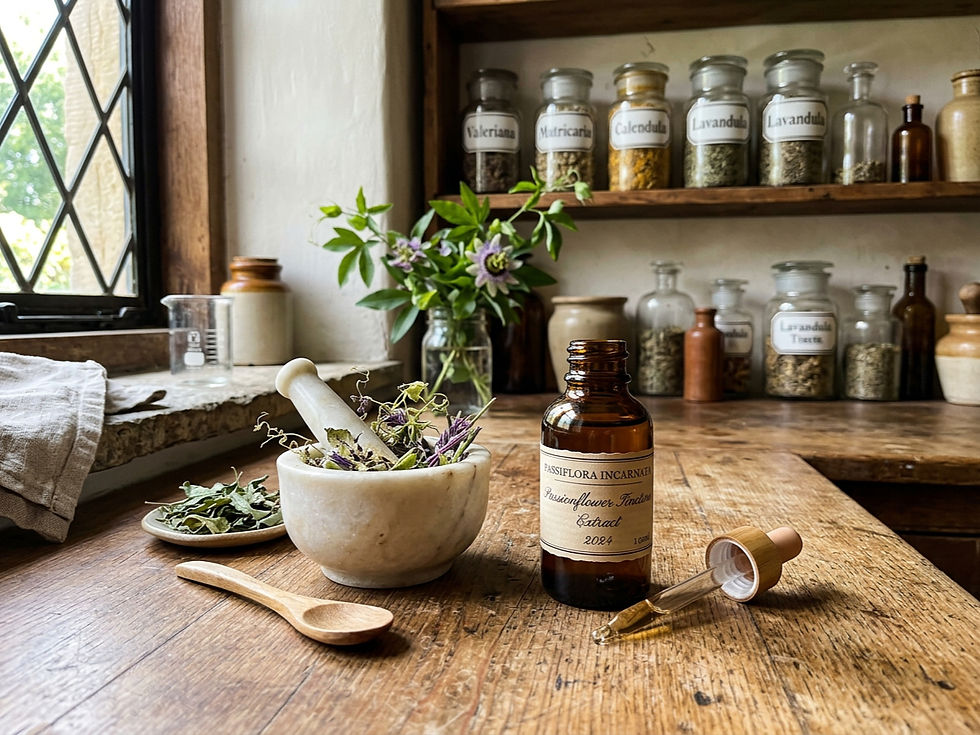
How to read the tissue state before giving passionflower
Don’t start with “What herb is good for anxiety?”
Start with “What kind of unrest is this?”
That one question will save you from poor matches.
Check the temperature
Ask what the person feels like.
Do they feel hot, irritated, inflamed, flushed, and wired? Passionflower may fit, especially with cooling nervines.
Do they feel cold, slow, flat, and heavy? Passionflower may not be the lead herb.
A hot, tense person may need cooling and relaxing.
A cold, tense person may need relaxing plus warming. Passionflower could pair with a small amount of ginger, cinnamon, or aromatic digestive herbs if appropriate.
A cold, collapsed person may not need passionflower at all.
Check the moisture
Dry tension often looks like brittle sleep and frayed nerves.
The person may be thirsty, dry-skinned, dry-mouthed, constipated, or sensitive to overstimulation. Tea is usually better than tincture here. Pair passionflower with moistening herbs if needed.
Good options may include:
Linden
Marshmallow leaf
Milky oats
Violet leaf
Licorice, when appropriate and not contraindicated
Damp heaviness looks different.
The person feels foggy, puffy, slow, and weighed down. Sleep may be excessive but not refreshing. Passionflower alone may make the heaviness increase. Use care.
Check tension versus relaxation
This is the biggest point.
Passionflower belongs to tension.
Tension has resistance. Tightness. Holding. Guarding. Clenching. Strain.
Relaxation tissue state, in the old sense, is too much looseness. Tissues lack tone. The person may feel limp, sagging, leaky, or unable to hold energy. They may have loose stools, prolapse tendencies, excess sweating, or a heavy, lax feeling.
That person may need astringents, tonics, nourishment, movement, and structure. Passionflower might not help.
Check the timing
Passionflower often fits evening patterns.
If symptoms rise as the day goes on, after stimulation, conflict, labor, caffeine, or screen use, the match gets stronger.
If the person wakes exhausted and never gets going, passionflower is less likely to be the center.
If panic, insomnia, or agitation is severe, new, or worsening, refer out. Herbs can support care, but they are not a substitute for clinical evaluation.
Check the pulse of the story
Traditional herbalism listens for patterns.
A passionflower story often sounds like this:
“I can handle the day, but I can’t come down at night.”
“My nerves are shot, but I still feel keyed up.”
“I’m tired, but my body won’t stop.”
“I’m praying, resting, doing the right things, but my nervous system is stuck on alert.”
That is a good place to think of passionflower.
On the other hand a bad match sounds like this:
“I’m exhausted all day.”
“I could sleep anytime.”
“I feel heavy and dull.”
“I’m foggy, cold, and unmotivated.”
“I don’t feel tense. I feel empty.”
That person needs a different plan.
Practical ways to use passionflower well
Match the person first. Then match the preparation.
For evening tea, keep it simple. Use passionflower alone the first time, or combine it with one or two herbs that clearly fit. A basic cup can teach you a lot.
For tincture, start with the low end of the dosage label directions. Watch for drowsiness, mood changes, digestive upset, or next-day grogginess.
Do not mix passionflower with alcohol. Do not drive after testing a sedating herb. Do not use it to push through a life that needs to change.
Use it with rhythm
Passionflower works best when the day supports the goal.
Try this for a tense sleep pattern:
Cut caffeine after late morning.
Eat enough protein and minerals.
Get outside in daylight.
Lower bright light at night.
Take passionflower tea after dinner or tincture near bedtime.
Keep the same sleep and wake time when possible.
That’s not fancy. Its holistic support. It works because the body responds to signals and rythyms.
Use the right plant part
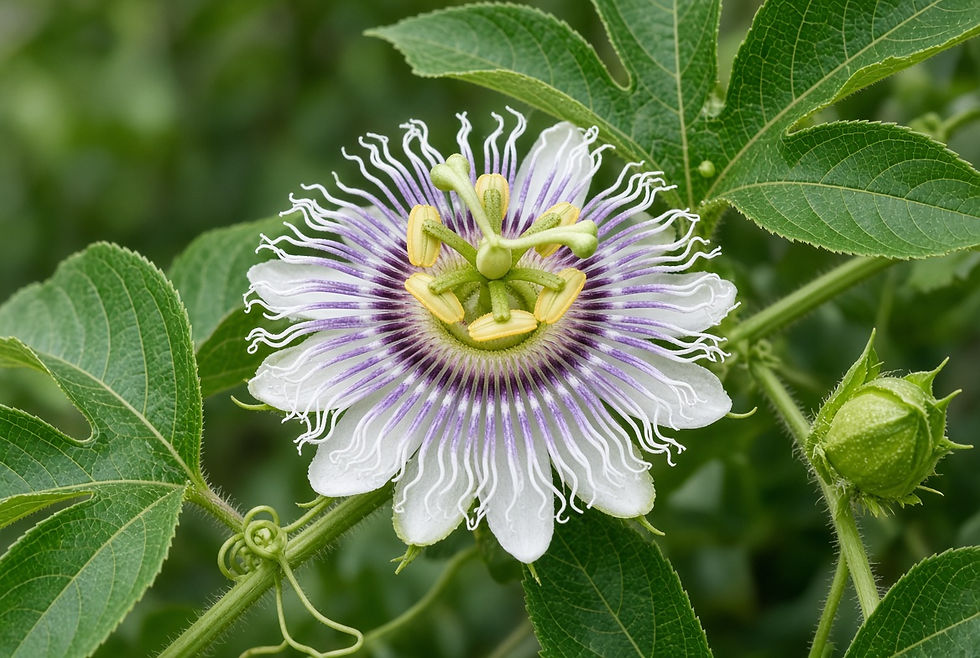
Use the aerial parts of Passiflora incarnata: leaf, stem, tendril, and flower.
Buy from a trusted source. If wildcrafting, confirm identification with real skill. Passionflower has many ornamental relatives, and not every pretty Passiflora vine should go into the apothecary.
Avoid moldy, old, faded herb. Dried passionflower should still look and smell alive enough to trust.
Don’t overdo the formula
A good passionflower formula does not need to be crowded with 12 other herbs.
Pick the direction.
For tension and circular thoughts, passionflower plus skullcap may fit.
For tender grief and chest tightness, passionflower plus linden and hawthorn may fit.
For nervous stomach, passionflower plus chamomile and lemon balm may fit.
For dry depletion, passionflower plus milky oats may fit.
If you need eight herbs to make the formula make sense, pause and reassess the tissue state.
The clear takeaway
The modern tendency is to match a plant to a complaint or to the herb that is circulating for stress. The older observational method matches the plant to the tissue state that is actually present. Passionflower has a clear traditional place when tension and constriction dominate the evening. When heat and irritation lead, skullcap is the closer match. When the system has gone flat after prolonged demand, hawthorn addresses the low-tone exhaustion. The same complaint can therefore require three different plants.
Use it when the person is tired but wired. Use it when the body is clenched and the mind won’t stop. Use tea when warmth, moisture, and calming habits matter. Use tincture when speed, portability, or smaller volume matters.
Prepare the herb simply—tea or a modest extract—use it for a limited time, and keep the larger conditions for rest in view. The plant supports the release of constriction so the body can settle. It does not force sleep, it does not replace the observations that selected it, and it is not interchangeable with whatever plant is currently recommended for the general label of stress.
Avoid it, or use skilled guidance, when a woman is pregnant, breastfeeding, the client is very young, already using sedatives, preparing for surgery, dealing with severe depression or exhaustion, prone to dizziness, or showing a cold, damp, sluggish pattern.
Traditional herbalism is not “this herb is good for sleep.”
Traditional herbalism asks, “What kind of sleeplessness is this?” What is the deeper pattern here?"
If the answer is tension, over-alertness, and nervous unrest, passionflower may be the palce to start. Peace
All information provided on this website, including blog posts, articles, and any related content, is for general informational and educational purposes only. It is not intended to diagnose, treat, prescribe, cure, mitigate, or prevent any medical condition or disease. Always consult a qualified healthcare provider before making any changes to your health regimen, including the use of herbs, teas, foods, or supplements discussed here. The author is not a licensed medical professional, and this content does not replace professional medical advice, diagnosis, or treatment. The author and One Stop Apothecary are not responsible or liable for any adverse effects, consequences, or outcomes resulting from the application or use of any suggestions, preparations, or information presented herein. Any use of this material is at the reader's own discretion and sole responsibility. These statements have not been evaluated by the Food and Drug Administration (FDA). This information is not intended to diagnose, treat, cure, or prevent any disease.
These are the primary sources drawn from during research and drafting of the tissue-state and preparation content. Links are actionable where available.
Passionflower (Passiflora incarnata): Benefits, Safety, UsesHerbal Realityhttps://www.herbalreality.com/herb/passionflower/
Passiflora incarnata L.: Ethnopharmacology, clinical application, safety and evaluation of clinical trialsScienceDirect / Journal of Ethnopharmacologyhttps://www.sciencedirect.com/science/article/abs/pii/S0378874113006983
Passionflower (Herb Profile)HerbalGram (American Botanical Council)https://www.herbalgram.org/resources/herbalgram/issues/112/table-of-contents/hg112-herbpro-passionflower
Passiflora incarnata in Neuropsychiatric Disorders—A Systematic ReviewPMC / Moleculeshttps://pmc.ncbi.nlm.nih.gov/articles/PMC7766837/
Passionflower (Integrative Medicine monograph)Memorial Sloan Kettering Cancer Centerhttps://mskcc.org/cancer-care/integrative-medicine/herbs/passionflower
Passion Flower: Overview, Uses, Side Effects, Precautions, Interactions, Dosing and ReviewsWebMDhttps://www.webmd.com/vitamins/ai/ingredientmono-871/passion-flower
Passion Flower Uses, Benefits & DosageDrugs.comhttps://www.drugs.com/npp/passion-flower.html
Passionflower benefits, dosage, and side effectsExamine.comhttps://examine.com/supplements/passionflower/
Randomized, Double-Blind, Placebo-Controlled, Clinical Study of Passiflora incarnata in Participants With Stress and Sleep ProblemsPMChttps://pmc.ncbi.nlm.nih.gov/articles/PMC11026993/PubMed: https://pubmed.ncbi.nlm.nih.gov/38646244/
Traditional tissue-state indications (including references to King’s American Dispensatory and Physiomedical/Thomsonian frameworks associated with Dr. John R. Christopher) were drawn from the historical summaries in the HerbalGram, Herbal Reality, and related ethnobotanical sources listed above.
Additional Sources
NCCIH — “Passionflower”
Safety, side effects, pregnancy, surgery, sedatives, and evidence for anxiety/sleep.
European Medicines Agency — “Passiflorae herba” European Union Herbal Monograph
Traditional uses, tea and extract preparations, age limits, pregnancy/breastfeeding cautions, and sedative interactions.
https://www.ema.europa.eu/en/documents/herbal-summary/passiflorae-herba-summary-public_en.pdf
MedlinePlus — “Passionflower”
Consumer-focused information on effectiveness, precautions, adverse effects, and interactions.
Memorial Sloan Kettering Cancer Center — “Passionflower”
Herb–drug interactions, sedative effects, mechanism, and clinical safety considerations.
https://www.mskcc.org/cancer-care/integrative-medicine/herbs/passionflower
Note: These references support the safety and traditional-use information in the article. The tissue-state matching framework is a traditional herbalism interpretation, not an established clinical diagnostic system.

Comments