
Passionflower for Tension and Sleep: A nervine for evening tension, not a mocktail stack.
Some nights the body is tired and the mind keeps circling. The same thought loops. Shoulders stay tight. Sleep does not arrive on its own. Social feeds answer that pattern with a fizzy drink of tart cherry juice, magnesium powder, and sparkling water, or with a melatonin capsule, or with a multi-ingredient stack meant to optimize the night. The plants already growing here offer a different path.
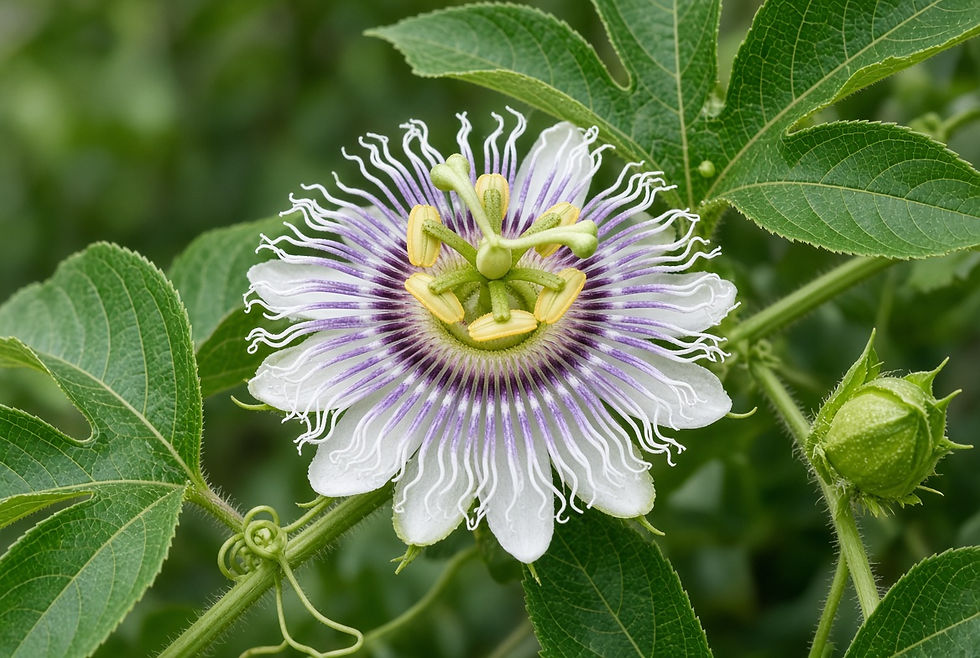
Passionflower (Passiflora incarnata), the maypop native to the southeastern United States, has long been used for exactly this pattern: evening tension with an overactive mind. It is a nervine, not a sedative knockout and not a circadian hormone. The distinction matters.
Sleep troubles linked to tension and anxiety are common challenges for many people. Among the many herbs used to ease evening tension, passionflower stands out as a nervine with a long tradition of calming effects. This post explores the evidence behind passionflower for tension sleep, its traditional uses, small clinical trials, and important cautions about sedation and interactions. If you want to understand how passionflower can support your evening routine without turning it into a “mocktail stack,” this full blog will guide you through practical insights and safety tips.
Tradition of Passionflower as a Nervine
Indigenous groups in the Southeast used the plant. Cherokee sources describe root preparations for inflammation and ear issues; other accounts note the Houma using root infusions as a tonic. European observers recorded Native American use of the vine for calming. Spanish accounts from the 1500s carried the plant’s reputation into Europe, where the flower’s structure was read as symbols of the crucifixion—an origin story for the common name.
By the late 1800s, American Eclectic physicians had clear indications. King’s American Dispensatory lists irritation of the brain and nervous system with atony, sleeplessness from overwork or worry, neuralgic pains with debility, exhaustion from cerebral fullness or excitement, and related states in both the young and the aged. Thomsonian and Physiomedical practitioners placed it among the nervines suited to tense or irritated tissue states of the nerves—overstimulation, circular thought, and restlessness rather than pure deficiency or deep atony without tension. The plant was chosen because observation matched the tissue state: the person who is tired yet cannot stop thinking, whose system is wound tight rather than simply depleted.
Traditional European use followed the same lane: nervous unrest, tension, irritability, and difficulty falling asleep. The plant was not promoted as a daily tonic for everyone or as a replacement for rest. It was a targeted tool for a recognizable pattern.
Herbalists often recommend passionflower tea or tincture in the evening to help unwind after a stressful day. Unlike stronger sedatives, passionflower encourages relaxation without dulling mental clarity, making it a preferred choice for those who want to avoid feeling groggy the next day.
What the plant contains and how it acts
The aerial parts—leaves, stems, and flowers—contain C-glycosyl flavonoids, especially vitexin, isovitexin, orientin, and isoorientin, along with smaller amounts of chrysin and related compounds. These flavonoids interact with the GABA-A receptor complex. The binding is partial and lower-affinity than pharmaceutical benzodiazepines; the result is modulation rather than full agonist action. Maltol and trace alkaloids have also been identified. The combined profile supports the traditional observation of calming without the heavy next-day fog reported with stronger sedatives.
Animal studies show reduced anxiety-like behavior and some anticonvulsant and antispasmodic effects. Human data remain limited but consistent with the traditional picture.
How Passionflower Works for Evening Tension
Passionflower contains several active compounds, including flavonoids and alkaloids, which contribute to its calming effects. The key mechanism involves modulation of GABA receptors in the brain. GABA acts like a brake on nerve activity, helping to calm the nervous system.
This action explains why passionflower can reduce feelings of tension and promote a sense of calm without the heavy sedation associated with pharmaceutical sleep aids. It’s a subtle support that helps the mind and body transition into restful sleep naturally.
Evidence from Small Trials
Scientific research on passionflower for tension sleep is limited but promising. Several small clinical trials have investigated its effects on anxiety and sleep quality:
A 2001 study published in the Journal of Clinical Pharmacy and Therapeutics found that passionflower extract improved sleep quality in patients undergoing surgery, reducing anxiety without causing significant sedation.
Another trial in 2017 showed that passionflower tea helped reduce anxiety symptoms in a group of adults with generalized anxiety disorder, with participants reporting better sleep.
Research also suggests passionflower may increase gamma-aminobutyric acid (GABA) in the brain, a neurotransmitter that promotes relaxation and reduces nerve excitability.
While these studies are small and more research is needed, the evidence supports passionflower’s traditional use as a nervine for evening tension and mild sleep difficulties.
Modern trials and their limits
A 2001 pilot trial compared passionflower extract with oxazepam in 36 people with generalized anxiety. Symptom reduction was comparable, with less job-performance impairment in the passionflower group. Several later trials tested single doses before surgery or dental procedures; anxiety scores dropped relative to placebo in most of them, often within 30–90 minutes. Everyday anxiety evidence rests on smaller samples.
For sleep, a double-blind crossover trial of passionflower tea for one week improved subjective sleep quality in healthy adults compared with placebo tea. Other short trials report modest increases in total sleep time or better self-rated quality, particularly when stress or mental tension is present. One 30-day extract trial in people with stress and insomnia showed reduced perceived stress and increased total sleep time versus placebo. Reviews note the pattern: small numbers, short durations, variable preparations, and stronger signals when tension or anxiety accompanies the sleep complaint. A Cochrane review of anxiety trials called the evidence too thin for firm conclusions. The European Medicines Agency permits traditional use for tension, restlessness, and related sleep difficulty, based on long experience rather than large modern trials.
The plant does not treat chronic insomnia as a stand-alone therapy. It does not correct poor sleep hygiene, shift-work disruption, or medical sleep disorders. Effects, when they appear, are mild to moderate and tied to the tension pattern the tradition already described.
Practical Use for DIY Home Herbalists
If you want to try passionflower for tension sleep, here are some practical tips:
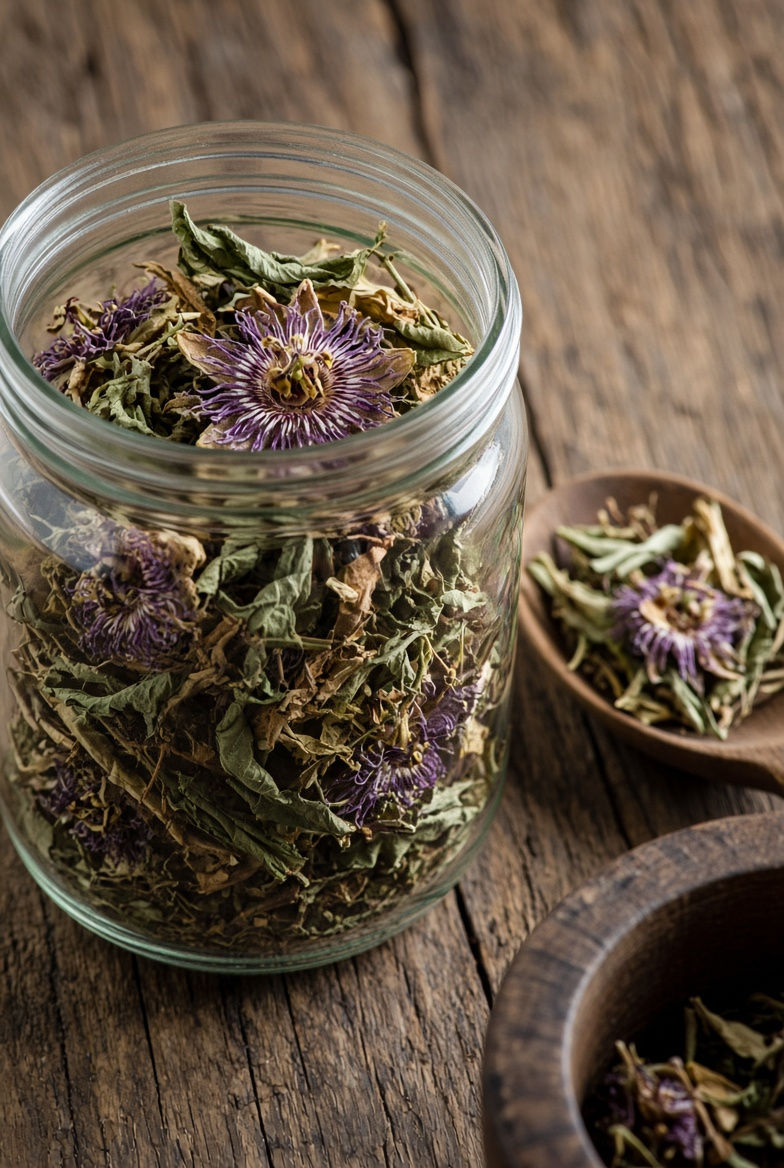
Forms: Passionflower is available as dried herb for tea, tincture, capsules, and extracts. Tea is a gentle way to start, while tinctures offer a more concentrated dose.
Dosage: Typical doses range from 0.5 to 1 gram of dried herb in tea, or 0.5 to 1 ml of tincture taken 30 minutes before bedtime.
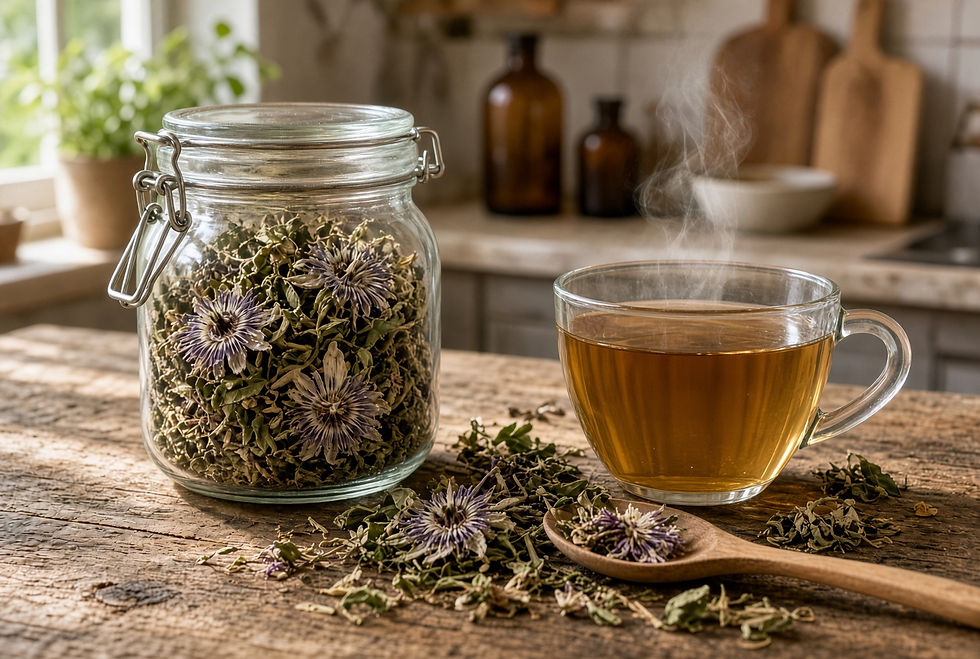
Preparation: Steep dried passionflower in hot water for 10-15 minutes to extract its active compounds fully.
Combination: Use passionflower alone rather than mixing with multiple other sedatives or “mocktail stacks” to avoid excessive sedation or interactions.
Duration: Use for short periods or as needed. Long-term safety data is limited.
Use the dried aerial parts. A simple infusion is one teaspoon of dried herb per cup of hot water, covered and steeped 10–15 minutes, taken in the evening. Traditional liquid-extract doses range from roughly 0.5–2 ml of a 1:5 or 1:8 tincture, once or twice later in the day. Capsule doses in trials have varied widely (roughly 250–900 mg of extract); commercial products differ, so start low and observe. Duration in published work is typically one to eight weeks. Longer continuous use is not well studied.
Catnip (Nepeta cataria) is a light traditional pairing. Both are mild nervines; the combination appears in older formulas for tension and restlessness. Use catnip only when the pairing is intentional and the person tolerates both plants. It is not required.
Prepare and take the herb as part of an evening routine that already includes consistent timing, reduced late light and screens, and a cool, quiet room. The plant supports the body’s own settling; it does not force sleep.
Sedation and Interaction Cautions
Passionflower is generally safe when used appropriately, but it can cause mild sedation. Combining it with other sedatives, alcohol, or medications that depress the central nervous system may increase drowsiness or cause unwanted effects.
Important cautions include:
Avoid driving or operating machinery after taking passionflower if you feel drowsy.
Consult a healthcare provider before use if you take prescription sedatives, antidepressants, or blood thinners.
Pregnant or breastfeeding women should avoid passionflower due to limited safety data.
Watch for allergic reactions or digestive upset, though these are rare.
Next Steps for Using Passionflower Safely
Start with a low dose of passionflower tea or tincture to assess your response.
Avoid mixing passionflower with other sedatives or alcohol.
Keep a sleep journal to track how passionflower affects your tension and rest.
Consult a healthcare professional if you have chronic health conditions or take medications.
Explore other calming herbs like chamomile or lemon balm for complementary support.
Safety, limits, and who should skip it
Passionflower is generally well tolerated for short periods. The most common effects are mild drowsiness or dizziness. Do not drive or operate machinery until you know your response.
Avoid during pregnancy. Animal and traditional data indicate possible uterine stimulation; safety data in humans are insufficient. Limited information exists for lactation, so avoidance is the cautious choice.
Use caution or avoid if you take sedative medications, benzodiazepines, barbiturates, or other central-nervous-system depressants. Additive effects are possible. Caution is also warranted with drugs that prolong the QT interval and with alcohol. Theoretical interactions with certain CYP3A4 substrates exist; check with a pharmacist if you take multiple medications. People with known heart-rhythm abnormalities should consult a clinician before use. Allergic reactions are uncommon but reported.
The herb does not replace medical care for anxiety disorders, depression, or chronic insomnia. It does not “balance hormones,” erase stress, or guarantee eight hours of sleep. Stop if you notice unusual fatigue, confusion, or any cardiac symptoms, and seek professional advice.
Against the current stacks
The sleepy-girl mocktail and magnesium-maxxing patterns sell a product and a mineral dose as the solution to evening tension. Magnesium has modest, inconsistent data for sleep in deficient people; tart cherry supplies small amounts of melatonin and other compounds. Melatonin itself is best reserved for circadian timing issues such as jet lag, not routine tension. Stacks that combine several of these with apigenin or L-theanine remain largely untested as combinations. The marketing treats sleep as a project to optimize.
Passionflower addresses a traditional observation: the mind that will not quiet. It is one plant, used for a recognizable tissue state, with clear traditional limits and modest modern support. It is not a substitute for the mocktail, nor is the mocktail a substitute for purposeful use for a recognizable pattern. If the tension pattern matches, the herb can be part of the evening. If the problem is poor habits, medical sleep disruption, or simple desire for a flavored drink, the plant will not fix it.
Rest is built into the created order. The body is designed to settle when the conditions are right. Passionflower is one traditional tool that can help when the nervous system is overstimulated and the mind keeps circling. Use it with the same attention you would give any other plant: know the part, the dose, the duration, and the person in front of you. Then let the night do its work.
Summary of Passionflower for Tension Sleep
Passionflower offers a gentle, traditional nervine option for easing evening tension and supporting restful sleep. Small clinical trials back its calming effects without heavy sedation, making it a useful herb for DIY home herbalists seeking natural sleep support. Use passionflower thoughtfully, with a purpose, avoid combining it with multiple sedatives, and respect interaction cautions to get the best results.
If you experience persistent sleep problems or anxiety, passionflower can be part of a broader holistic approach including lifestyle changes and professional advice. This nervine is not a quick fix but a supportive herb to help calm the nervous system naturally.
Passionflower for tension sleep offers a natural, evidence-supported way to ease evening tension without turning your routine into a complicated “mocktail stack.” With respect for tradition, awareness of small trials, and attention to sedation and interaction cautions, you can confidently include this nervine in your herbal toolkit.
Disclaimer: This content is for informational purposes only and does not replace professional medical advice. Consult a healthcare provider before starting any new herbal regimen.
All information provided on this website, including blog posts, articles, and any related content, is for general informational and educational purposes only. It is not intended to diagnose, treat, prescribe, cure, mitigate, or prevent any medical condition or disease. Always consult a qualified healthcare provider before making any changes to your health regimen, including the use of herbs, teas, foods, or supplements discussed here. The author is not a licensed medical professional, and this content does not replace professional medical advice, diagnosis, or treatment. The author and One Stop Apothecary are not responsible or liable for any adverse effects, consequences, or outcomes resulting from the application or use of any suggestions, preparations, or information presented herein. Any use of this material is at the reader's own discretion and sole responsibility. These statements have not been evaluated by the Food and Drug Administration (FDA). This information is not intended to diagnose, treat, cure, or prevent any disease.
References and sources
Passionflower (Passiflora incarnata): Benefits, Safety, UsesHerbal Realityhttps://www.herbalreality.com/herb/passionflower/
Passiflora incarnata L.: Ethnopharmacology, clinical application, safety and evaluation of clinical trialsScienceDirect / Journal of Ethnopharmacologyhttps://www.sciencedirect.com/science/article/abs/pii/S0378874113006983
Passionflower (Herb Profile)HerbalGram (American Botanical Council)https://www.herbalgram.org/resources/herbalgram/issues/112/table-of-contents/hg112-herbpro-passionflower
Passiflora incarnata in Neuropsychiatric Disorders—A Systematic ReviewPMC / Moleculeshttps://pmc.ncbi.nlm.nih.gov/articles/PMC7766837/
Passionflower (Integrative Medicine)Memorial Sloan Kettering Cancer Centerhttps://mskcc.org/cancer-care/integrative-medicine/herbs/passionflower
Passion Flower: Overview, Uses, Side Effects, Precautions, Interactions, Dosing and ReviewsWebMDhttps://www.webmd.com/vitamins/ai/ingredientmono-871/passion-flower
Passion Flower Uses, Benefits & DosageDrugs.comhttps://www.drugs.com/npp/passion-flower.html
Passionflower benefits, dosage, and side effectsExamine.comhttps://examine.com/supplements/passionflower/
Randomized, Double-Blind, Placebo-Controlled, Clinical Study of Passiflora incarnata in Participants With Stress and Sleep ProblemsPMC / PubMed (example of modern trial data)https://pmc.ncbi.nlm.nih.gov/articles/PMC11026993/https://pubmed.ncbi.nlm.nih.gov/38646244/
Passionflower for Anxiety: What 7 Pre-Surgery Trials Show (and related trial summaries including Akhondzadeh et al. 2001 and Ngan & Conduit 2011)Various secondary summaries of primary trials; primary papers available via PubMed searches for “Passiflora incarnata anxiety” or “passionflower sleep.”
Traditional indications (Eclectic / King’s American Dispensatory, Physiomedical tissue-state notes) were drawn from the historical summaries in the HerbalGram, Herbal Reality, and related ethnobotanical sources listed above.
Additional sources
Janda et al. — “Passiflora incarnata in Neuropsychiatric Disorders—A Systematic Review”
Nutrients (2020)
Ngan & Conduit — “A double-blind, placebo-controlled investigation of the effects of Passiflora incarnata herbal tea on subjective sleep quality”
Phytotherapy Research (2011)
Akhondzadeh et al. — “Passionflower in the treatment of generalized anxiety: a pilot double-blind randomized controlled trial with oxazepam”
Journal of Clinical Pharmacy and Therapeutics (2001)
NCCIH — “Passionflower”
Safety, traditional uses, anxiety and sleep evidence, pregnancy and surgery precautions
Miroddi et al. — “Passiflora incarnata L.: Ethnopharmacology, clinical efficacy, safety and evaluation of clinical trials of a traditional herbal medicinal product”
Journal of Ethnopharmacology (2013)


Comments