
Boneset for Flu-Like Fever - Short Course Use Not Daily
Boneset is not a seasonal wellness tea. It’s not a daily immune habit. It’s not a cozy winter tonic to sip from November through March.
Its traditional use is much narrower: a hot, bitter cup during a short stretch of flu-like fever, chills, and deep body aches.
That matters because herbs get flattened into trends. Anything “immune” gets thrown into the same basket, from elderberry syrup to reishi blends to vitamin C packets. Boneset doesn’t belong in that basket. It was traditionally used as a diaphoretic, meaning an herb used to support sweating during feverish illness.
The first colds of the season bring the same pitch every year. Stack elderberry, turkey tail, vitamin D, zinc, oil of oregano, and whatever else is on the shelf, then take it every morning until spring. Some of those plants have a real, limited place. Boneset does not belong in that daily pile. Eupatorium perfoliatum is a North American fever herb. Used hot, briefly, and then stopped, it matches an old pattern of care. Used as a tonic, it steps outside both the tradition and the safety data we now have.
That’s a specific job. It’s not a lifestyle habit, not a seasonal hack.

Boneset has a specific traditional lane
Boneset, usually referring to Eupatorium perfoliatum, is a North American plant in the aster family. It has rough, opposite leaves that look like the stem passes through them. Herbalists call that “perfoliate.” That’s where the species name comes from.
Historically, boneset was used in North American herbal practice for fevers with aching. Older eclectic medical texts mention it for influenza-like illness, intermittent fevers, and “bone pains.” The common name often gets tied to the old phrase “breakbone fever,” a name used for illnesses marked by severe aches.
That history explains the plant’s lane.
The common name is easy to misread. It does not come from knitting broken bones. Settlers and physicians used it for breakbone fever, the deep bone and muscle ache of dengue-like and influenza-like illness, and for intermittent fevers. Indigenous peoples of the eastern woodlands already used it as a fever and cold remedy. That use is what carried it into settler households, then into Thomsonian, Eclectic, and Physiomedical practice, and into the United States Pharmacopeia from 1820 to 1916, where it was listed as a stimulant and diaphoretic.
A second, thinner story says the tea was poured over fractures or the plant was used as a bone poultice. That is not the lane this week is about. Internal boneset is a fever plant. External folk use does not make a daily capsule safer.
Boneset is not a general stimulant. It’s not a mushroom. It’s not an adaptogen. It’s not a pleasant nutritive tea like nettle or oatstraw. It’s bitter, strong, and traditionally used when a person feels feverish, chilled, sore, and wiped out.
The key concept is diaphoresis.
A diaphoretic is used to encourage sweating. In traditional herbal practice, sweating was one way to support the body’s fever process. One of the eliminative pathways through the skin. That doesn’t mean “force a sweat at all costs.” It means using warmth, fluids, rest, and certain herbs to help the body move through the natural hot-cold rhythm of an acute illness.
Boneset was most often prepared as a hot infusion. Hot matters. A cold tincture and a hot cup of tea are not the same experience in the body. Traditional diaphoretic use usually includes heat from the liquid, blankets, rest, and sleep.
A typical boneset cup isn’t delicious. People remember it because it’s bitter. That bitterness is part of the plant’s identity. It also helps explain why daily use makes little sense. A strong bitter fever herb is not the same thing as a daily mineral-rich tea.
Here’s the plain version:
Use category Acute feverish illness with aches, in traditional practice
Timing Short course, during the illness window
Preparation style Hot infusion, taken warm
Taste Bitter and medicinal
Not the use Daily immune support, long-term tonic, winter wellness stack
This is where the phrase belongs: Short course use, Not Daily. A diaphoretic is not a winter tonic. Boneset has a narrow traditional lane. These statements sum up the whole point.
Boneset for Flu-Like Fever makes sense only if “flu-like” means the old-school picture: chills, feverishness, body aches, and that heavy sick feeling that sends you to bed.
It does not mean every sniffle. It does not mean stress. It does not mean “I was near someone coughing, so I’ll take boneset for a month.”
That’s category confusion. That's the improper use for this herb.
Why the old physicians reached for it
Samuel Thomson’s system treated obstructed perspiration as a root problem. Cold, in his framing, checked the skin. Fever was the body’s attempt to restore heat and open that outlet. His own note on thoroughwort, his name for boneset, is short. He called it warming and useful for cough and lung complaints, a country tea already in wide use. Later Thomsonian writers expanded that. They used the hot infusion to sweat a cold, and the cold infusion as a slow bitter for the liver and for lingering ague. The hot cup was the acute tool. The cold cup was the tonic use. Those are not the same preparation, and they should not be treated as the same risk.
Eclectic and Physiomedical writers were more specific about the person in front of them. The classic picture was an intermittent or influenza-like fever with chills, a deep ache “as if the bones were breaking,” a coated tongue, nausea, and a sweat that would not come or would not finish the job. The hot infusion was a relaxant diaphoretic for that pattern. Large doses were frankly nauseating and, pushed far enough, emetic. Moderate doses of the warm tea were the household method: sore back, sore limbs, a cold that had settled into the muscles.
Dr. John R. Christopher worked in that same Thomsonian line. He treated fever as something to support, not only to suppress, and he kept diaphoretics in the acute kit for the stage when the skin needed to open. Boneset sits in that kit as a short-course fever herb, not as a food. Christopher’s school did not invent the plant. It inherited a use already sorted by tissue state: chilled, aching, skin closed, fever not resolving cleanly.
In Physiomedical terms, the tissue state is not “low immunity.” It is an acute cold or tense state with a stuck fever. The person is sore to the bone, often thirsty, often worse from motion, and not sweating in proportion to the heat. Boneset was chosen because the hot tea is bitter, diffusive, and sweat-inducing in that window. It was not chosen because someone wanted a winter-long immune identity.
That observational frame is one reason the plant is still talked about. The other is laboratory work. Both have limits, and the limits matter more than the nickname.
A diaphoretic is not the same as an immune tonic
The word “immune” gets used too broadly. It can mean almost anything now. That’s the problem.
A daily immune tonic is usually mild enough for repeated use. Think of herbs and foods used for general nourishment, seasonal support, or resilience. They tend to be gentler. They may be used for weeks by people who can tolerate them.
A diaphoretic sits in another category. It’s used during an acute process. The goal is not to “boost immunity.” The goal is to support the body during a feverish stage, often by helping the skin open and sweat.
Those are different jobs.
Daily tonic
Used for general support over time. Usually mild, food-like, or nutritive.
Example mindset
“I want steady winter support.”
Wrong fit for boneset
A daily cup because it’s winter.
Diaphoretic
Used during an acute feverish illness. Often taken hot, with rest and fluids.
Example mindset
“I’m feverish, chilled, aching, and going to bed.”
Better fit for boneset
A short course during a clear flu-like fever pattern.
Mushroom powders and capsules add more confusion.
Medicinal mushrooms like reishi, turkey tail, maitake, and cordyceps are often marketed as “immune support.” Some have research on immune markers or compounds such as beta-glucans. That still doesn’t make them interchangeable with boneset.
Mushroom stacks are usually sold as daily-use products. Boneset isn’t that. A hot, bitter diaphoretic tea for an acute feverish illness is a different tool.
Picture a home apothecary shelf.
A daily mineral tea might sit near the kettle. A mushroom powder might sit near breakfast. Boneset should sit farther back, clearly labeled, and used only when its moment arrives.
That’s not fear. It’s respect for the herb. That's correctly using an herb for a real purpose.
Strong herbs deserve boundaries. The fact that something is traditional does not mean it’s harmless at any amount, for any person, every day. Traditional use often came with limits. Specific plants had specific jobs.
Boneset’s job was never “take this daily for immunity.”

Why the “winter tonic” label is a bad fit
A tonic herb make sense with repetition. Boneset doesn’t.
Daily use raises practical and safety questions. It’s bitter enough to discourage casual use. It has a history tied to acute fever. It also has safety concerns that make long-term use a poor idea.
Some members of the Eupatorium genus have been associated with liver concerns due to pyrrolizidine alkaloids, often shortened to PAs. The exact risk depends on the plant, preparation, dose, and quality of the material. But the conservative takeaway is simple: don’t use boneset casually or for long stretches.
That’s especially true when herb quality is unclear. Commercial “boneset” should be correctly identified as Eupatorium perfoliatum leaf and flower. Misidentification matters in herbal medicine. The wrong plant can change the risk.
This is another reason boneset doesn’t belong in a trendy stack. Trend products often blur identity and parts of the plant that are used. Traditional fever herbs need precision.
Why “immune boosting” is the wrong goal
The immune system is not a muscle you max out at the gym. More immune activity is not always better. Fever, inflammation, mucus, and aches are already signs that the body is active and doing its job as God intended.
With flu-like illness, the goal is support and good judgment.
That means:
Resting early
Drinking fluids
Eating lightly if hungry
Using fever reducers when needed and appropriate
Testing for COVID or flu when it matters
Getting medical care when symptoms are severe
Considering antiviral medication if at high risk and within the treatment window
Boneset does not replace any of that.
With influenza, prescription antivirals work best when started early, often within the first 48 hours. They matter most for people at higher risk, including older adults, pregnant women, young children, and people with chronic health conditions. That’s integrated mainstream medical care, not an herbal debate.
If someone has shortness of breath, chest pain, confusion, dehydration, blue lips, a stiff neck, a fever that won’t come down, or symptoms that improve and then crash again, that’s not a “make tea and wait” situation.
Boneset’s traditional lane is narrow because with illness correct informed judgment matters.
When boneset fits, and when it doesn’t
Boneset fits the classic picture of acute feverish illness with aches.
That can include:
Chills followed by heat
Deep muscle and joint aches
Heavy fatigue
A flu-like sick feeling
Dry or low-sweat fever stage
Desire to sleep and sweat it out
That does not diagnose influenza. “Flu-like” can mean influenza, COVID-19, RSV, another viral infection, or something more serious. The symptom pattern guides whether boneset is traditionally relevant, but it doesn’t identify the cause.
Use common sense. If testing matters for work, family, travel, treatment, or risk level, test. If symptoms are intense or unusual, call a clinician.
Boneset is a support herb. It is not a diagnostic tool. Not a seasonal cure-all.
A short course means days, not weeks
Short course use means using boneset only during the acute feverish stage. Think in terms of a brief illness window, not a seasonal habit.
For many home herbalists, that might mean a day or two during the roughest aches and chills. Some may use it up to a few days. Long daily use is not the traditional target and is not a smart safety choice.
Stop when the feverish, aching stage passes. Don’t keep taking it “just to finish the jar.” Don’t continue because it “worked once.” Don’t take it every morning after recovery.
A good rule:
When the acute fever-and-aches picture is gone, boneset’s job is done.
The body may still need rest. That’s normal. Post-viral fatigue can linger. Boneset is still not the answer for rebuilding after illness.
For recovery, think supportive and useful:
Sleep
Fluids
Brothy soups
Protein
Gentle movement when ready
Time away from hard workouts
Medical follow-up if symptoms drag on or worsen
That’s not glamorous. It works better than forcing more herbs into the plan.
It’s not for mild sniffles
Boneset is too strong a choice for a tickle in the throat or a little congestion.
For mild upper respiratory symptoms, gentler options are usually a better fit. Warm tea, honey for adults and children over age 1, saline spray, steam, thyme, ginger, lemon, or plain rest may be enough.
Boneset is the herb you think of when the illness has weight to it. Feverish. Achy to the bone. Chilled. Bed-bound.
That doesn’t mean stronger is better. It means match the herb to the pattern.
Using strong herbs for mild symptoms is like using a snow shovel to dust crumbs off the counter. Wrong tool. Too much force. Bad fit.
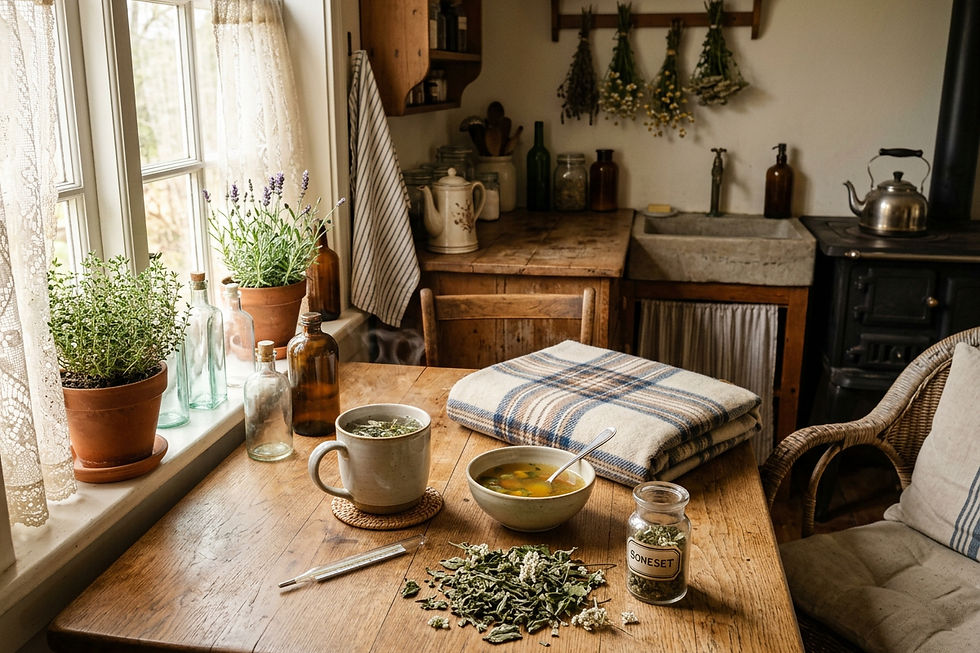
How a traditional short course usually looks
This is informational only. It is not medical advice. If there’s any doubt about safety, diagnosis, pregnancy, medications, chronic illness, or severity, talk with a qualified clinician.
Boneset is most often discussed as a hot infusion. That means tea.
The dried aerial parts are typically steeped covered in hot water. Herbal references vary on exact amounts and timing, and people’s tolerance varies too. The safer principle is to use the smallest effective amount, take it only during the acute stage, and avoid long use.
Boneset is very bitter. Strong preparations may cause nausea or vomiting. Older herbal texts sometimes mention emetic effects at higher amounts. That’s not a bonus. That is a different, very specific use. That’s a sign to back off or avoid it.
A practical short-course approach has a few parts.
Use hot water and rest
The “hot” part does real work in traditional diaphoretic practice. Warm fluid supports hydration. Warmth can help someone feel less chilled. Drinking tea also slows things down. You sit. You rest. You stop trying to power through.
A hot boneset infusion traditionally pairs with:
Warm blankets
A quiet room
Sleep
Sips of water or broth
Light food if wanted
Avoiding alcohol
The goal isn’t to sweat until drenched. The goal is comfort and support during the fever rhythm. Overheating can be dangerous, especially for children, older adults, and anyone frail or dehydrated.
If sweating starts, replace fluids. Fever already increases fluid needs. Sweating adds to the need of replacing fluids.
Signs of dehydration include dark urine, dizziness, dry mouth, racing heart, and not urinating much. Those signs matter more than any herb plan.
Hot, brief, then done
If boneset is used at all, the traditional acute preparation is a hot infusion of the dried aerial parts, drunk warm, for a few days while the feverish ache is actually present.
Use leaf and flower, not a mystery root product. Put about 1 to 2 grams of dried herb, roughly a teaspoon of cut leaf, in a cup. Pour just-boiled water over it, cover, and steep 10 to 15 minutes. Strain. Drink it warm. The covered steep matters because you want the aromatic fraction kept in the cup, not lost to the room. One to three cups across a day is the old household range, and only while the picture still fits: feverish, deeply achy, skin not doing its job. Many people find it strongly bitter and, in a larger cup, nauseating. That nausea is a stop signal, not a sign to push through.
A short course means days, not weeks. A reasonable outer bound for an otherwise healthy adult is three to five days, then stop, whether you feel finished or not. Do not refill the jar out of habit when the next coworker coughs. Do not put it in a winter immune oxymel “just in case.” Do not take a daily capsule because the label says immune support.
The plant is also a poor match for a dry, tickly cough with no fever, for ordinary tiredness, or for a head cold that never left the nose. Those are different problems. Wild cherry already had the short cough week. Boneset is not the understudy.
Keep the dose conservative
More boneset is not better.
Strong boneset tea can be rough on the stomach. If nausea starts, stop using it. If vomiting starts, stop using it. If diarrhea starts, stop using it. If a rash or allergic reaction appears, stop using it and seek care as needed.
People who work with herbs sometimes get comfortable with strong tastes and strong preparations. That comfort can hide the obvious point: the average person does not need a punishing cup of tea.
A bitter cup during a short window is one thing. Repeated strong cups for days on end is another.
If using a commercial product, follow the label and avoid stacking multiple boneset products at once. Tea plus tincture plus capsules is not a better plan. It’s just more exposure that builds up to a higher dose.
Don’t mix it into complicated stacks
Boneset should be easy to track. If it helps, causes nausea, or triggers a reaction, you want to know what did it.
That gets hard when the cup includes twelve herbs, the counter has three mushroom powders, and the supplement tray has a dozen capsules.
During acute illness, keep things simple.
A reasonable support plan might include:
One main herb formula or tea for a specific purpose
Fluids
Rest
Food as tolerated
Medication when needed and appropriate
Medical care if warning signs appear
That’s enough.
Complicated stacks also increase the chance of interactions. Boneset’s interaction profile is not as well defined as common drugs. That uncertainty is a reason for caution, not a reason to pretend there’s no risk.
What modern work actually shows
There is no high-quality clinical trial showing that boneset tea prevents influenza, shortens it, or replaces rest, fluids, and medical care. Drugs.com’s monograph states the plain version: there is no clinical evidence to guide the use of boneset. Traditional dose references cluster around 2 grams of leaf and flower. That is a historical figure, not a proven therapeutic dose.
What exists is preclinical. A 2011 review of chemistry and use reported anti-inflammatory effects of ethanolic extracts in animal and cell work, tied in part to flavonoids such as eupafolin and to sesquiterpene lactones, plus antiplasmodial activity against Plasmodium falciparum in vitro. The same review noted that immunostimulant claims were not confirmed by the in vitro data, and that the one human report often cited was an older, non-placebo-controlled study of 53 people with common cold. That study does not meet modern trial standards, and it should not be stretched into “boneset cures colds.”
A separate cell study found that a hydroalcoholic extract could inhibit influenza A virus attachment in culture. Attachment data in a dish are a reason to keep studying the plant. They are not evidence that a daily tincture will keep a household from getting sick. Dengue-virus cell work has also been reported. Interesting, and still not a human outcome.
So the modern file supports a modest statement. Some constituents can affect inflammatory signaling, and an extract can interfere with viral attachment in vitro. It does not support prevention stacks, immune-boosting marketing, or months of use. The traditional reason for the herb and the laboratory reason point at the same narrow window: an acute, feverish, aching illness. They do not point at October through March supplementation.
The chemistry that matters for safety
Boneset contains caffeic acid derivatives, flavonoids, sesquiterpene lactones, tannins, polysaccharides, and a small volatile fraction. Those groups are the usual explanation for the bitter taste and for the anti-inflammatory signals in lab work. None of them erases the finding that changed how responsible herbalists handle the plant.
The American Herbal Pharmacopoeia’s boneset monograph confirmed unsaturated pyrrolizidine alkaloids (PAs) in authenticated samples. The alkaloids were lycopsamine and intermedine, along with related forms. They showed up in the crude herb and in teas and tinctures made the traditional way. Levels were low compared with notorious PA plants, and they still exceeded interim European limits for herbal medicinal products. Some makers pulled boneset from formulas after that work. The practical reading is not panic. It is duration.
Unsaturated PAs are metabolized in the liver to reactive pyrroles. Over time, and especially with higher exposure, they can injure hepatic venules and, in animal models, raise cancer concern. Direct case reports of boneset liver failure are lacking. That absence is not a free pass. The class effect is established, the alkaloids are really in this species, and clearance depends on hepatic glutathione systems that are not equally strong in every person. Pregnancy, infancy, existing liver disease, and heavy alcohol use are the wrong settings for even a short course.
This is why the cold tonic use has to be retired. A bitter cup now and then for digestion was an old Eclectic habit. It is also repeated exposure to PAs for a complaint that does not need this plant. Bitters with a cleaner safety record exist. Boneset does not get to be one of them.
Who should avoid boneset or get medical advice first
Boneset is not a casual herb for every household. Some people should avoid it unless a qualified clinician says otherwise.
Children, pregnant women, and any child still nursing should skip it. So should anyone with liver disease, a history of unexplained elevated liver enzymes, or heavy daily alcohol use. Anyone on hepatotoxic drugs, or on medicines where added liver load is a bad idea, should not experiment. Asteraceae allergy is a practical caution. Boneset is in the composite family. If ragweed, chamomile, or feverfew reliably swells your mouth or closes your chest, do not drink this tea to find out.
That includes people who are:
Pregnant
Breastfeeding
Living with liver disease
Taking medications that affect the liver
Allergic to plants in the aster family
Using immune-suppressing drugs
Managing serious chronic illness
Giving herbs to children
Older, frail, or at higher risk from flu complications
The aster family includes ragweed, chamomile, echinacea, yarrow, daisies, and many other plants. Not everyone with ragweed allergies reacts to every aster-family herb, but it’s a real caution.
Liver concerns also deserve respect. Because of the broader PA issue in some related plants, boneset is a poor choice for long-term use and a poor choice for anyone with liver vulnerability.
Children are another major caution. Kids can worsen quickly with feverish illness. They also dehydrate faster. Don’t use boneset for a child without guidance from a pediatric clinician or an experienced herbal practitioner who knows pediatric herbal safety.
Red flags mean medical care
A flu-like illness can turn serious. Don’t let an herbal plan delay care.
Get medical help urgently for:
Trouble breathing
Chest pain or pressure
Blue or gray lips
Confusion
Fainting
Severe weakness
Signs of dehydration
Fever with stiff neck
Fever in a very young infant
Fever that is very high or persistent
Symptoms that improve, then return worse
Severe headache with rash
Worsening symptoms in someone high risk
High-risk groups include older adults, infants and young children, pregnant women, and people with asthma, heart disease, diabetes, immune suppression, kidney disease, or other significant chronic conditions.
Flu, COVID-19, RSV, and pneumonia can overlap in symptoms. Testing and treatment decisions matter.
Using boneset should never mean skipping care when care is needed.
Be careful with fever suppression and sweating
People often ask whether it makes sense to combine diaphoretic herbs with fever reducers like acetaminophen or ibuprofen.
The honest answer: use judgment and follow medical guidance. Fevers serve a specific purpose as part of the natural healing cycle. Fever reducers can help with comfort and can be appropriate. They also change the fever experience. A diaphoretic approach comes from a different model. Understand the correct approach and reasoning for each.
Don’t overthink it to the point of suffering. If fever or pain is intense, medication may be the right tool. If there are medical reasons to use or avoid certain drugs, follow those instructions.
Also remember that acetaminophen has a strict daily limit and can harm the liver at high doses or when combined with alcohol. Many cold and flu products already contain it. Read labels.
That point matters even more if someone is thinking about an herb with liver-related cautions. Don’t pile stress on the same organ.

Put boneset back in its proper place
Boneset makes the most sense when you stop trying to make it something modern in the wrong way.
It doesn’t need to become a daily capsule. It doesn’t need a shiny “immune support” label. It doesn’t need to compete with mushroom powders. Its value comes from being specific. Being used with a purpose.
The live social media pitch is not Boneset by name. It is hidden in the heroic flu stack: a mushroom megadose, a greens powder, a vitamin tower, and a promise that you will not get sick if you take all of them daily. Turkey tail and other polypores are all over that pitch right now, helped by new product launches and by lab and early clinical talk about beta-glucans and immune signaling.
Food mushrooms in a pot of soup are nutritive and supportive food. A seven-mushroom capsule taken every morning from October to April is a different claim. It is the claim that a stack can stand in for sleep, broth, and a week of rest.
Boneset gets dragged into the same story when sellers call it an immune tonic. That is the forced fit. A diaphoretic used for three days of breakbone ache does not do the job of a beta-glucan supplement, and a beta-glucan supplement is not used to sweat out a fever. Putting them together in one “winter immune” basket blurs both.
If you want a food-level mushroom, eat shiitake or maitake in the soup or the bone broth you should be eating anyway while you are febrile. If you want the purposeful benefits Boneset, use the hot tea for the ache, on a short clock, and leave the daily stack on the shelf.
Usnea belongs in that same caution, and only as an identification and ethics note. Old man’s beard is a lichen, not a kitchen mint, and some species are slow and locally pressured. This week is not a reason to start a wild-harvest Usnea habit.
A hot, bitter cup for the short stretch of an influenza-like fever with deep aches. That’s the lane.
Herbal medicine works best when the purpose is clear:
The plant matches the pattern.
The preparation matches the purpose.
The duration matches the safety profile.
The person using it has no obvious reason to avoid it.
Medical care stays on the table.
Boneset fails as a winter tonic because it was never meant to be one. It fits acute, feverish, achy illness in traditional use. Once that stage passes, put it away.
What you do with a purpose matters
The cup of tea is the smaller part of the day. Fever raises fluid needs. Warm broth, salted soup, and plain water do more over three days than any herbal stack. Eat simply if you can hold it down. Bitter herbs on an empty, nauseated stomach are a good way to vomit a useful plant. A small bowl of broth first is the better order.
The ache you feel is part of this pattern of the body spending resources fighting and repairing. Extra training, a packed calendar, and a second immune powder do not speed that work. Sleep, a cool room, and enough covers to let a sweat finish the job are the old companions of a diaphoretic. They are still the right companions.
When the fever breaks and the bone ache eases, the boneset stops. You do not taper it into a tonic. You do not “support immunity” with another week of the same herb. You go back to ordinary food, ordinary movement once strength returns, and thankfulness to our Father that the acute stretch ended.
Boneset is a good plant in a small window. Hot, bitter, brief, and done. That is the history and the safety file can both stand behind. The daily immune version is a modern fad story laid on top of an old fever tea. Leave that story with the other stacks.
That’s not being timid. That’s good herbal practice.
Use gentle daily supports for daily needs. Use acute herbs for acute moments. Keep the categories clean.
Boneset deserves that kind of respect. So does the body dealing with the fever. Peace
All information provided on this website, including blog posts, articles, and any related content, is for general informational and educational purposes only. It is not intended to diagnose, treat, prescribe, cure, mitigate, or prevent any medical condition or disease. Always consult a qualified healthcare provider before making any changes to your health regimen, including the use of herbs, teas, foods, or supplements discussed here. The author is not a licensed medical professional, and this content does not replace professional medical advice, diagnosis, or treatment. The author and One Stop Apothecary are not responsible or liable for any adverse effects, consequences, or outcomes resulting from the application or use of any suggestions, preparations, or information presented herein. Any use of this material is at the reader's own discretion and sole responsibility. These statements have not been evaluated by the Food and Drug Administration (FDA). This information is not intended to diagnose, treat, cure, or prevent any disease.
Sources
American Herbal Pharmacopoeia Publishes Boneset Monograph and Therapeutic Compendium (HerbalGram / American Botanical Council)https://www.herbalgram.org/resources/herbalgram/issues/125/table-of-contents/hg125-orgnews-ahpboneset/
Boneset monograph excerpt (American Herbal Pharmacopoeia, hosted summary PDF)https://www.uni-muenster.de/imperia/md/content/pharmazeutische_biologie2/institut/meldungen/boneset_monograph_081919_reduced.pdf
Potentially toxic pyrrolizidine alkaloids in Eupatorium perfoliatum and three related species. Implications for herbal use as boneset — Colegate et al., Phytochemical Analysis, 2018https://pubmed.ncbi.nlm.nih.gov/29968391/
Boneset Uses, Benefits & Dosage (Drugs.com Natural Products)https://www.drugs.com/npp/boneset.html
Eupatorium perfoliatum L.: Phytochemistry, traditional use and current applications — Hensel et al., Journal of Ethnopharmacology, 2011https://www.sciencedirect.com/science/article/abs/pii/S037887411100729X
Antiviral activity of hydroalcoholic extract from Eupatorium perfoliatum L. against the attachment of influenza A virus — Derksen et al., Journal of Ethnopharmacology, 2016https://pubmed.ncbi.nlm.nih.gov/27178637/
Boneset (Eupatorium perfoliatum) (Herbal Reality)https://www.herbalreality.com/herb/boneset/
Thorough-Wort, Boneset — Eupatorium perfoliatum (Dr. Thomson) (The Thomsonian System of Medicine)https://www.chestofbooks.com/health/materia-medica-drugs/The-Thomsonian-System-Of-Medicine/Thorough-Wort-Boneset-Euparorium-Perfoliatum-Dr-Thomson.html
Eupatorium. Boneset (A Practitioner’s Handbook of Materia Medica and Therapeutics, T. S. Blair)https://www.chestofbooks.com/health/materia-medica-drugs/A-Practitioner-Handbook-Of-Materia-Medica-and-Therapeutics/Eupatorium-Boneset.html
Boneset (Georgia Southern physic garden, quoting Maud Grieve, A Modern Herbal, 1931, on breakbone fever and the United States Pharmacopeia listing)https://ww2.georgiasouthern.edu/finops/facilities/landscape-services/arboretum/major-collections/physic-garden/boneset/
Eupatorium perfoliatum: Top Health Benefits, Traditional Uses, and Safe Dosage Guide (VitaLibrary; secondary summary of the PA and evidence limits)https://vitalibrary.com/eupatorium-perfoliatum-immune-support/
Additional references
Potentially toxic pyrrolizidine alkaloids in Eupatorium perfoliatum — Read the study on PubMed
Pyrrolizidine Alkaloids: Health Risks and Guidance — Read the NIH LiverTox overview
Influenza (Flu) — Review prevention and treatment guidance from CDC
Herbs at a Glance: Safety Information — Review NIH NCCIH guidance

Comments