
Nettles in Traditional Herbal Practice: The Nutritive Tonic, Spring Blood Builder, and Everyday Supportive Ally
Stinging nettle (Urtica dioica) has never been a flashy plant. It grows in disturbed ground, along fence lines, in rich soil near old farmsteads and stream banks. Brush against it and it announces itself immediately. Yet for thousands of years, across Europe and later in North America, herbalists, cooks, and country people treated nettle less as a single-purpose remedy and more as a foundational food-medicine—something that nourished while it gently supported the body’s own restorative work.
In traditional practice, nettles occupied a distinctive middle ground. They were eaten as a spring green, brewed into long infusions, fermented into simple beers, and used in everyday household formulas. The emphasis was rarely on dramatic intervention. Instead, nettles were valued for their capacity to rebuild, mineralize, and steady systems that had become depleted by winter, hard labor, illness, or simply the ordinary demands of life. This older view of the plant as a nutritive tonic and supportive ally offers a useful counterweight to more aggressive modern framing.
This article is informational only and is not medical advice. If you are pregnant, managing a health condition, taking medication, or unsure whether nettle is right for you, check with a qualified herbalist or healthcare professional.

Why nettles became a classic spring tonic
Historical and Traditional Roles
References to nettle stretch back to the classical Mediterranean world. Hippocrates is said to have recorded dozens of applications. Dioscorides, writing in the first century CE, described nettle as tonic, diuretic, digestive, and useful for wounds, bleeding, and certain respiratory complaints. Galen recommended it for similar purposes, including as a diuretic and for conditions involving the spleen and lungs. Pliny the Elder noted its hemostatic properties. These early authors already treated the plant as both food and medicine.
In the medieval and early modern periods the same themes continued. Hildegard of Bingen recommended spring nettle for certain digestive and constitutional imbalances. By the time of the great English herbals, nettle was thoroughly domesticated in folk and professional practice. John Gerard noted its use as a counter-poison among other applications. Nicholas Culpeper, writing in the mid-seventeenth century, gave nettle an extensive entry. He recommended preparations of the leaves or roots for respiratory congestion, urinary gravel, bleeding, skin conditions, and joint discomfort. Culpeper’s language reflects the humoral thinking of his time: nettle was understood to move and clear while also supporting the body’s substance.
British and Irish folk medicine consistently placed nettle among the classic spring tonics. Along with dandelion, elder, and the docks, it was taken “to cleanse the blood” after winter—language that, in its historical context, pointed less to modern detox ideology and more to the practical experience of eating mineral-rich greens when the body needed rebuilding. Nettle was eaten to address anemia and general weakness, used for nosebleeds and other bleeding, applied externally, and taken for rheumatic complaints. One distinctive traditional practice was urtication: the controlled stinging of painful joints with fresh nettles as a counter-irritant, a method recorded across multiple cultures and centuries.
Native American peoples also incorporated the plant (both U. dioica and related species) after its introduction or in areas where related nettles grew. Uses included infusions for various internal complaints, external applications, and, importantly, as a source of strong fiber for cordage and textiles. Women in several nations used nettle preparations around childbirth and as a general tonic.
Across these traditions a consistent picture emerges. Nettle was not primarily a crisis remedy. It was a plant of ordinary resilience—nutritive, mildly astringent, diuretic, and alterative in the older sense of supporting the body’s gradual clearing and rebuilding processes.
When people speak about Nettles in Traditional Herbal Practice, they often refer to this long-standing role as a rebuilding herb. Nettle was not treated as a quick fix. It was taken regularly, often as tea, broth, soup, or cooked greens, to restore a sense of strength over time.
That steady quality is the heart of nettle’s reputation. It does not shout. It supports.
Classic Supportive Formulas and Everyday Preparations
Traditional use favored simple, food-like preparations over highly concentrated extracts. The most common forms were cooked greens, long-steeped infusions, and fermented drinks.
Young spring tops were boiled or steamed like spinach. Cooking neutralizes the stinging hairs and yields a dark green, mineral-dense vegetable that was often mixed with other early greens or added to soups and broths. This culinary use is itself medicinal in the traditional view: the plant delivers nutrition in a form the body can readily use.
The classic nutritive infusion remains one of the most practical traditional methods. A substantial amount of dried leaf (commonly one ounce by weight per quart of water in later folk-herbal practice) is covered with boiling water and steeped for several hours or overnight. The long steep extracts minerals, chlorophyll, and other constituents more thoroughly than a short tea. The resulting liquid is dark, earthy, and can be drunk by the cupful over the course of a day. This preparation sits squarely in the “food-medicine” category—more concentrated than ordinary tea, yet still gentle and nourishing rather than forcefully medicinal.
Nettle beer or ale appears repeatedly in historical records as both a refreshing drink and a household remedy, particularly for rheumatic complaints. Traditional recipes typically combined young nettle tops with water, sugar or molasses, ginger, and sometimes other spring herbs such as dandelion or cleavers, then fermented with yeast. The resulting lightly alcoholic or lightly fermented beverage was considered wholesome and supportive. Versions recorded by Maude Grieve and earlier domestic manuals treat it as an ordinary country drink with mild therapeutic reputation rather than a potent pharmaceutical.
Other traditional preparations included honey mixtures for the throat and lungs, simple decoctions of root or leaf for urinary support, and external washes or poultices. Nettle was frequently combined with other common plants. Dandelion appears often in spring tonics and beers. In later Western herbal practice it is paired with mineral-rich or gently supportive herbs such as oatstraw, red clover, raspberry leaf, or yellow dock in nourishing formulas aimed at rebuilding after depletion. The guiding principle was complementarity: nettles supplied broad mineral nutrition and mild alterative action while companion herbs refined the direction of the formula.
What these traditional approaches share is moderation and consistency. Nettles were used regularly in season or in courses of several weeks, not in megadoses for rapid effect. The plant was allowed to work as a steady supportive presence.
What herbalists mean by a nutritive tonic
A tonic herb is usually taken consistently, in moderate amounts, over days or weeks. A nutritive tonic goes a step further. It offers actual nourishment, not just a strong herbal action.
Nettles are famous for this.
Dried nettle leaf is traditionally valued for its mineral content, especially the minerals people associate with green leafy plants. It also has a briny, grassy flavor that makes it feel more like food than medicine. A strong nettle infusion can taste almost like a vegetable broth.
That food-like quality matters. Many of the most trusted herbs in home herbalism are not dramatic. They are dependable. Oats, red clover, dandelion leaf, burdock root, and nettle all belong to that practical lineage of herbs that bridge kitchen and apothecary.
Nettle is best understood as a steady daily herb, not a dramatic overnight remedy.
As a Nutritive Tonic, Spring Blood Builder, Everyday Supportive Ally, nettle has earned its place in cupboards, kitchens, and apothecaries because it is simple to use and easy to weave into ordinary life.
The old idea of the spring blood builder
The phrase “blood builder” can sound old-fashioned, and it is. In herbal tradition, it usually points to nourishment, mineral replenishment, and a renewed feeling of vitality after winter.
It does not mean nettle cures blood disorders or replaces medical care. Rather, it reflects how herbalists and home gatherers observed the plant in seasonal use. After months of stored grains, preserved foods, and fewer fresh greens, nettles offered a welcome dose of green vitality.
Spring nettle dishes were common in many places where the plant grows. People cooked young leaves into soups, stews, egg dishes, and savory pies. Cooking neutralizes the sting, and the leaves take on a spinach-like character with a deeper, earthier taste.
This is one reason nettle feels different from herbs used only by the dropperful. It belongs at the table.

How nettles support everyday wellness traditions
Nettle leaf is often used as a daily supportive herb because it is gentle for many people and easy to prepare. In herbal households, it may show up in several simple ways.
Nettle tea
A light nettle tea is the easiest place to start. It has a grassy, mineral flavor that pairs well with mint, lemon balm, oatstraw, or rose hips.
Use dried nettle leaf rather than fresh unless you know how to handle the plant safely. Fresh nettles sting before they are dried, cooked, or blended.
Strong nettle infusion
A strong infusion is a more traditional tonic preparation. It uses more dried herb and a longer steep than a casual cup of tea. The result is darker, richer, and more food-like.
Many herbalists prepare it in a quart jar, let it steep for several hours, then strain and refrigerate it. It can be sipped cold or warm.
Cooked nettle greens
Young nettle tops can be cooked like spinach once safely harvested and handled with gloves. They work well in:
Soups and broths
Frittatas and scrambles
Pasta fillings
Rice and grain bowls
Savory pancakes or fritters
Never eat raw fresh nettles unless they have been properly processed in a way that removes the sting, such as thorough blending or cooking.
Nettle vinegar
Herbal vinegars are another old kitchen method. Dried nettles can be steeped in apple cider vinegar for several weeks, then strained. The finished vinegar can be used in salad dressings, cooked greens, or marinades.
This is less about making a concentrated extract and more about preserving the plant in a practical pantry form.
The best preparations for different needs
Different preparations bring out different sides of nettle. A quick tea, a strong infusion, and cooked greens do not feel the same in the body or in the kitchen.
Preparation | Best use | Notes |
Light tea | Casual daily sipping | Mild flavor and easy to blend with other herbs |
Strong infusion | Traditional mineral-rich tonic use | Steeps longer and tastes more like broth |
Cooked greens | Seasonal spring food | Use young leaves and cook thoroughly |
Herbal vinegar | Kitchen mineral tonic | Adds nettle to meals in small daily amounts |
Powdered nettle | Smoothies, soups, capsules | Choose a trusted source and store away from heat |
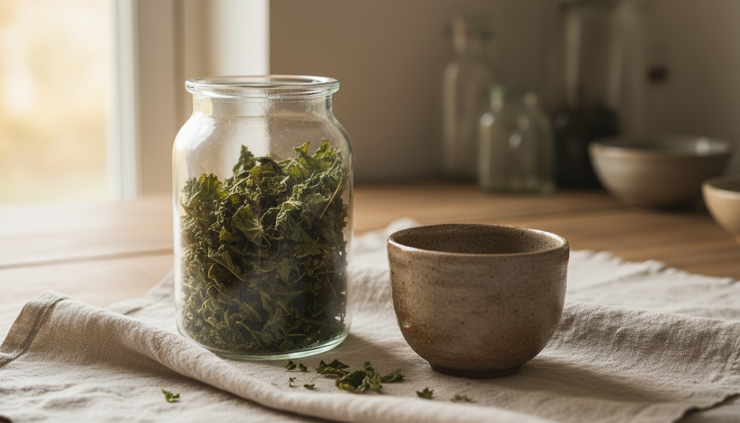
For most home use, dried nettle leaf is the most convenient. It stores well, does not sting, and is available year-round.
The Holistic and Balanced View
Traditional herbalism understood nettles through the lens of nourishment and gentle correction rather than aggressive clearing. The older language of “blood purifier” or “spring tonic” reflected an observational reality: people who ate and drank nettle preparations in spring often felt stronger, less heavy, and better able to meet the demands of the season. The plant’s high content of minerals, chlorophyll, and other constituents made it a logical choice for recovery from winter scarcity, convalescence, or simple fatigue.
In energetic terms common to Western traditional herbalism, nettle leaf is often described as cooling and drying with a nutritive, slightly astringent quality. It was understood to support the kidneys and fluid metabolism while simultaneously building the body’s substance. This dual character—mildly eliminative yet deeply nourishing—distinguishes it from more purely stimulant or purely depleting remedies. It could be given to people who needed rebuilding without the risk of further draining already limited reserves.
This balanced profile explains why nettle appears in so many traditional women’s tonic and postpartum contexts, in formulas for general weakness, and as a daily or seasonal supportive herb rather than a short-term intervention. The plant’s role was to help the body do what it already knew how to do: restore, mineralize, and maintain resilience.
Modern readers sometimes collapse traditional “blood-purifying” language into contemporary detox marketing. The historical record suggests a different emphasis. Traditional practitioners were not primarily chasing toxins; they were feeding and gently supporting systems that had become under-nourished or stagnant. Nettle excelled at that quieter work

How to identify and gather nettles safely
Nettle grows in many temperate regions, often in moist, fertile soil. It may appear near stream banks, woodland edges, gardens, fields, and disturbed ground.
If foraging, proper identification is essential. Stinging nettle usually has opposite leaves, serrated edges, square-ish stems, and fine stinging hairs. The sting is real, so gloves, long sleeves, and scissors are helpful.

Gather only from clean areas away from roadsides, sprayed lawns, industrial sites, and polluted water. Plants can take up substances from the soil, so the harvest location matter.
A few basic gathering guidelines help protect both the person and the plant:
Harvest young tops before the plant flowers.
Take only what you need.
Leave plenty for wildlife and regrowth.
Use gloves until the nettles are dried or cooked.
Avoid harvesting any plant you cannot identify with confidence.
If foraging is not a good fit, buying organic dried nettle leaf from a reputable herb supplier is a safe and simple option.
When nettle may not be the right herb
Nettle is widely used, but no herb is right for everyone.
Because nettle can have a noticeable effect on fluid balance for some people, anyone taking diuretics, blood pressure medication, blood thinners, diabetes medication, or lithium should seek medical guidance before using it regularly. People with kidney disease should also be cautious and speak with a clinician.
Pregnant women should ask a qualified practitioner before using nettle, especially in concentrated forms. Herbal opinions on nettle during pregnancy vary, and personal health context matters.
Allergies are possible with any plant. Start with a small dose if nettle is new to you, and stop using it if you notice an unwanted reaction.
The goal is not fear. The goal is respect.
Simple ways to make nettle part of a routine
Nettle works best when it is easy. A complicated ritual might sound lovely, but a habit you actually keep is more useful.
Try one of these simple approaches:
Keep dried nettle beside your regular tea supplies.
Make one quart of strong infusion once or twice a week.
Add a spoonful of nettle vinegar to salad dressing.
Stir nettle powder into soup near the end of cooking.
Blend nettle with milder herbs if the flavor feels too green.
A good beginner blend is nettle, oatstraw, and peppermint. The nettle brings the mineral-rich green note, oatstraw adds softness, and peppermint makes the cup brighter.
Another blend could be nettle, dandelion and red clover. The nettle gives an earthy foundation, dandelion adds protective diuretic movement, while clover contributes gentle blood purification.
For a spring kitchen approach, cook nettles with garlic, olive oil, and a squeeze of lemon. Add them to eggs, beans, potatoes, or pasta. Simple food often honors the plant best.

Two simple preparations stay close to historical practice and remain accessible today.
Long nutritive infusion
Place one ounce (by weight) of dried nettle leaf in a quart jar. Cover with boiling water, cap, and steep four to eight hours or overnight. Strain and drink one to several cups throughout the day. This is the classic mineral-rich tonic preparation. It can be refrigerated for a day or two. Start with smaller amounts if you are new to strong herbal infusions.
Cooked spring greens
Harvest young nettle tops with gloves. Wash and boil or steam for a few minutes until the sting is gone. Use like spinach—alone with butter or oil, in soups, mixed with other greens, or stirred into eggs or grains. This is perhaps the most direct continuation of traditional food-medicine use.
The steady strength of nettles
Nettles remind us that powerful herbal traditions do not always center on rare plants or complicated formulas. Sometimes the most valued ally is the green one growing at the edge of the path, waiting for spring.
Nettle’s long record is not a story of dramatic cures. It is a story of a common plant that people returned to, generation after generation, because it reliably helped them feel more nourished, more steady and supported them in allergy season. In an era that often favors intensity, following the traditional approach to nettles offers a quieter model: feed the body's systems, support its natural power, and let the work of restoration happen at a natural pace.
As a tonic, nettle is humble and generous. As a food, it is practical. As a seasonal herb, it connects the body to the turning year. Its long history comes from that combination of nourishment, availability, and everyday usefulness.
That older understanding remains available to anyone willing to meet the plant on its own terms—as a nutritive tonic, a spring ally, and an everyday supportive presence rather than a quick fix. That is where this traditional herb shines. Peace
All information provided on this website, including blog posts, articles, and any related content, is for general informational and educational purposes only. It is not intended to diagnose, treat, prescribe, cure, mitigate, or prevent any medical condition or disease. Always consult a qualified healthcare provider before making any changes to your health regimen, including the use of herbs, teas, foods, or supplements discussed here. The author is not a licensed medical professional, and this content does not replace professional medical advice, diagnosis, or treatment. The author and One Stop Apothecary are not responsible or liable for any adverse effects, consequences, or outcomes resulting from the application or use of any suggestions, preparations, or information presented herein. Any use of this material is at the reader's own discretion and sole responsibility. These statements have not been evaluated by the Food and Drug Administration (FDA). This information is not intended to diagnose, treat, cure, or prevent any disease.
References and Sources
American Botanical Council / HerbalGram – Stinging Nettle herb profile (history, traditional uses, Dioscorides, Culpeper, folk medicine).https://www.herbalgram.org/resources/herbalgram/issues/110/table-of-contents/hg110-herbpro-stingingnettle/
American Botanical Council – Expanded Commission E Monograph on Stinging Nettle Herb and Leaf (classical and traditional indications).https://www.herbalgram.org/resources/expanded-commission-e-monographs/stinging-nettle-herb-and-leaf/
American Botanical Council – Food as Medicine: Stinging Nettle (nutritive and historical food-medicine context).https://www.herbalgram.org/resources/herbalegram/volumes/volume-15/number-7-july/food-as-medicine-stinging-nettle-urtica-dioica-urticaceae/food-as-medicine
EMA HMPC Assessment Report on Urtica dioica L.; Urtica urens L., herba (historical data from classical and European folk sources).https://www.ema.europa.eu/en/documents/herbal-report/final-assessment-report-urtica-dioica-l-urtica-urens-l-herba-revision-1_en.pdf
ACORN School of Herbal Medicine – Nettles monograph (traditional actions, preparations, historical notes including Culpeper and Galen).https://www.acornherbschool.com/plants/nettles
Herbal Reality – Nettle (Urtica dioica) profile (nutritive tonic role, historical use, traditional indications).https://www.herbalreality.com/herb/nettle/
Alleanza Verde – Urtica L. Monograph (humoral and traditional clinical actions, nutritive and blood tonic perspectives).https://www.alleanzaverde.com/blog/urtica-l-monograph/
Holistic Farming – “Stinging Nettle: More Than a Weed, More Than a Cure” (Western herbal corpus summary, preparations, historical overview).https://www.holisticfarming.ca/p/stinging-nettle-more-than-a-weed
Culpeper-related historical references compiled in secondary sources (e.g., Gerard, Culpeper entries on nettle virtues). Representative accessible discussion:https://doctorlib.org/herbal/breverton-complete-herbal/14.html
Traditional nettle beer recipes and historical domestic use (Maude Grieve tradition and Victorian/earlier household recipes).https://www.eatweeds.co.uk/traditional-nettle-beer-recipehttps://www.sewhistorically.com/victorian-nettle-beer-and-kvass-small-beer-recipes-historical-food-fortnightly/
Henriette’s Herbal (Eclectic and historical texts) – Urtica entries (Felter and related traditional therapeutic notes).https://www.henriettes-herb.com/eclectic/felter/urtica.html
Additional historical and ethnobotanical context on British/Irish folk use and spring tonic tradition (referenced via HerbalGram and related compilations).


Comments